When a supplier changes a delivery date in Mandarin, you can follow the discussion with Felo Translator’s live captions and use the same phone after the meeting to ask a driver which station entrance you need.
Before the first conversation
- Install Felo Translator on your iPhone or Android phone before you leave. Allow microphone access when prompted. Test a sentence on the connection you expect to use, especially if you usually rely on office Wi-Fi.
- Keep the meeting agenda and your destination handy. A supplier’s product code, a station name in Chinese characters and a map pin are all easier to point to than to dictate.
- Ask the participants whether you can use speech translation and keep a transcript. Agree on what you can share afterwards, particularly if someone will discuss a client or a quote.
How Felo handles the meeting and the reply
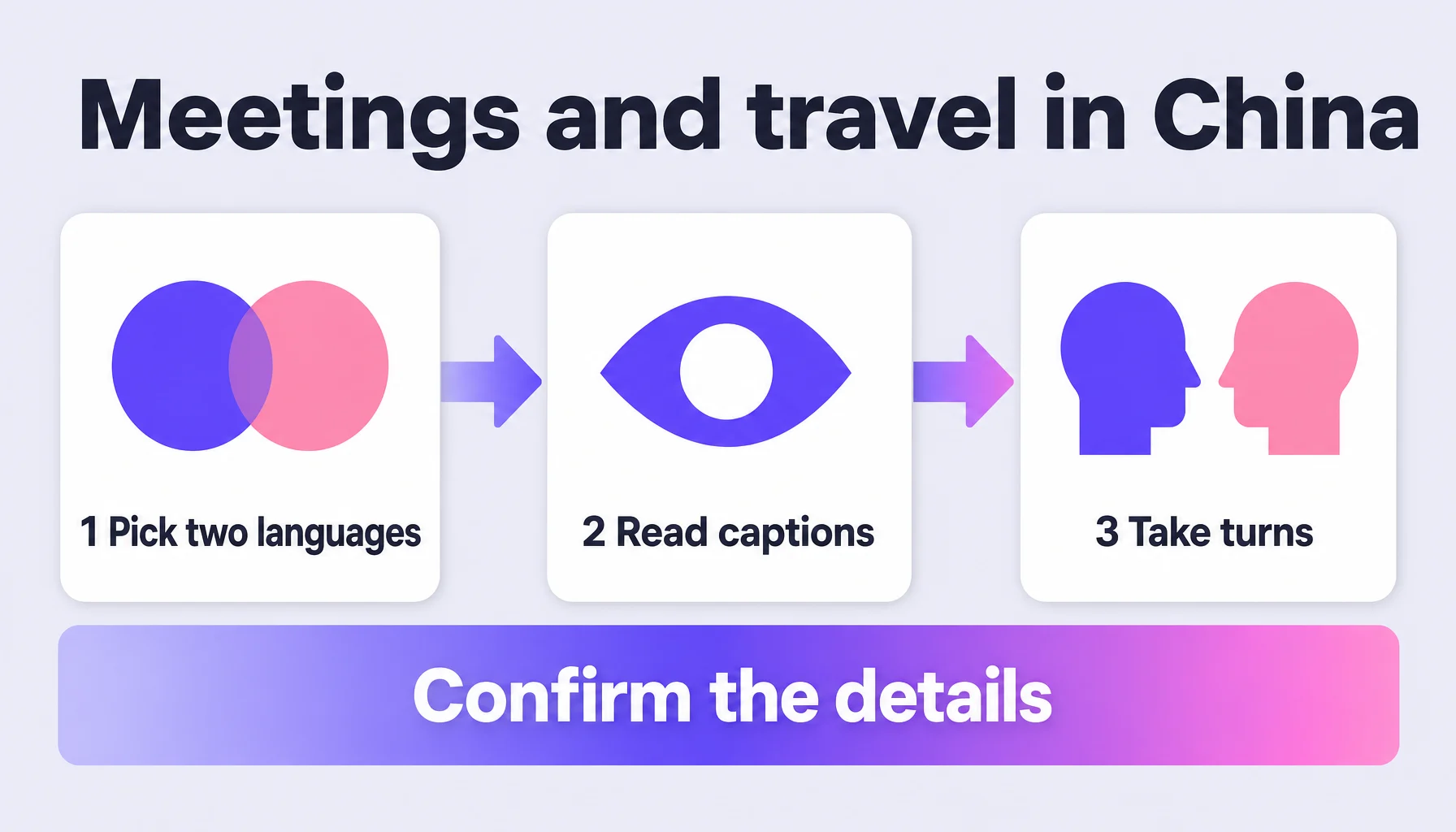
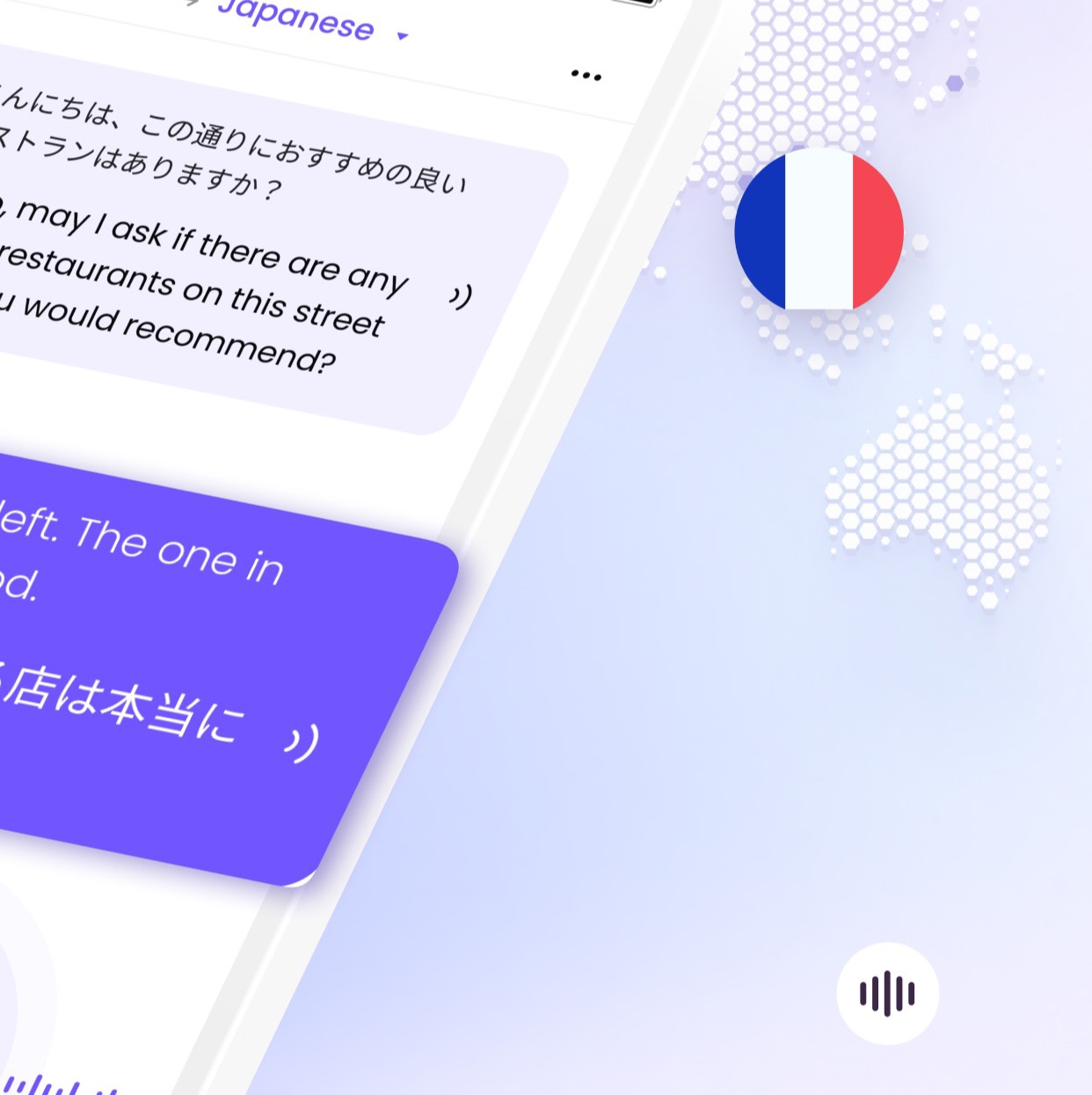
Choose the two languages people will actually speak. Felo recognizes either one and displays the spoken line with its translation. In a meeting, you can keep the phone volume down and follow the bilingual text while the speaker has the floor. At a hotel counter, you can let Felo read your question aloud in Chinese, then read the receptionist’s reply in English. The other person can use your phone for the whole exchange. Felo’s guide to voice translation
From the first sound check to the last decision
- Choose the language pair and start voice translation. For an English-speaking visitor meeting a Mandarin-speaking team, choose English and Chinese (Simplified). Ask a colleague to say “我们十点开始。” Look for “We start at ten” in English. Reply “I’m ready” and let your colleague check the Chinese. You’ve now tested both directions before anyone gets to the agenda.
- Check the sound from the seat that matters. Put the phone on the table with the microphone clear of your notebook and coffee cup. Ask someone at the far end to say the name of the first agenda item. If the beginning of the line is missing, move the phone closer and try again. That quick check tells you more than testing with the phone in your own hand.
- Read for the decision as the speaker finishes. Suppose you see “周四能发样品,周五才能发货。” The samples can go out on Thursday. The goods can only ship on Friday. If you catch just “Thursday,” look at what comes after it before putting a date in your calendar. If a colleague interrupts, ask the original speaker to repeat the last sentence.
- Use your own turn to check one detail. Say “Will the goods leave on Friday?” The Chinese question might read “货是周五发出吗?” Leave room for an answer. Then ask about arrival. A simple yes to “Will it ship on Friday and arrive on Monday?” leaves you guessing which half the speaker understood.
- Close the meeting with a sentence someone can correct. Read back “You’ll send the samples on Thursday and the goods on Friday. Is that right?” After the meeting, reopen the saved transcript and find the response next to those dates. Use the confirmed dates in your follow-up. If nobody gave an arrival date, leave that field open.
- At the next counter, let the other person answer on the same phone. Start a fresh conversation and keep the English–Chinese pair if it still fits. Say “Which entrance should I use?” Play the Chinese translation or show it on screen. Hold the phone where it can hear the reply. When you see a gate number, point it out on your ticket or map before walking away.
Two exchanges to try in China
In a taxi. Show the driver your map pin while the car is stopped. If your ticket says 上海虹桥站, ask “Can you take me to the departure entrance for this railway station?” A possible reply is “去火车站出发层,对吗?” (“The departures level at the railway station, right?”). Point to the station name on the ticket. That extra word, railway, matters when the neighbouring airport also has Hongqiao in its name.
At the hotel. Ask “Can I leave my suitcase here after checkout?” The receptionist might answer “可以,下午六点前来取。” (“Yes, please collect it before six this evening.”) Follow with “我五点半来取,可以吗?” (“Is it OK if I collect it at 5:30?”). You now have a pickup time you can act on.
Small adjustments that make speech easier to follow
- Give each question its own turn. Ask “Which entrance?” and wait before asking “How long does it take to walk there?”
- Say the unit with the number. “Fifteen boxes” gives your colleague something more precise to correct than “fifteen.”
- In a quiet meeting, show a colleague the line you’re checking. At a noisy counter, hold the screen so the receptionist can read it comfortably.
- For model numbers, booking names and similar station names, put the original spelling beside the translation.
Where to take extra care
- Live translation needs mobile data or Wi-Fi. Keep the hotel address and ticket available offline for the moment your connection drops.
- When two people speak at once, the transcript can blend their words. Ask each person to repeat their part before assigning a task or a date.
- For a price, deadline or change to an order, get the agreed wording in writing. The saved conversation can help you locate the discussion.
Common questions
Does my Chinese colleague need to install Felo? One phone can handle both sides of an in-person conversation. Leave the microphone within reach of the person answering.
What if the speaker uses Cantonese? Select Cantonese in the language pair if that’s what the speaker uses. Test one short exchange before the discussion gets underway.
Can I revisit the line I missed? Yes. Felo keeps a bilingual transcript on your phone. Find the original and translation together, then ask the speaker about the particular word or date that was unclear.
The Felo Editorial Team writes about language, voice translation, and the details of talking across borders.